
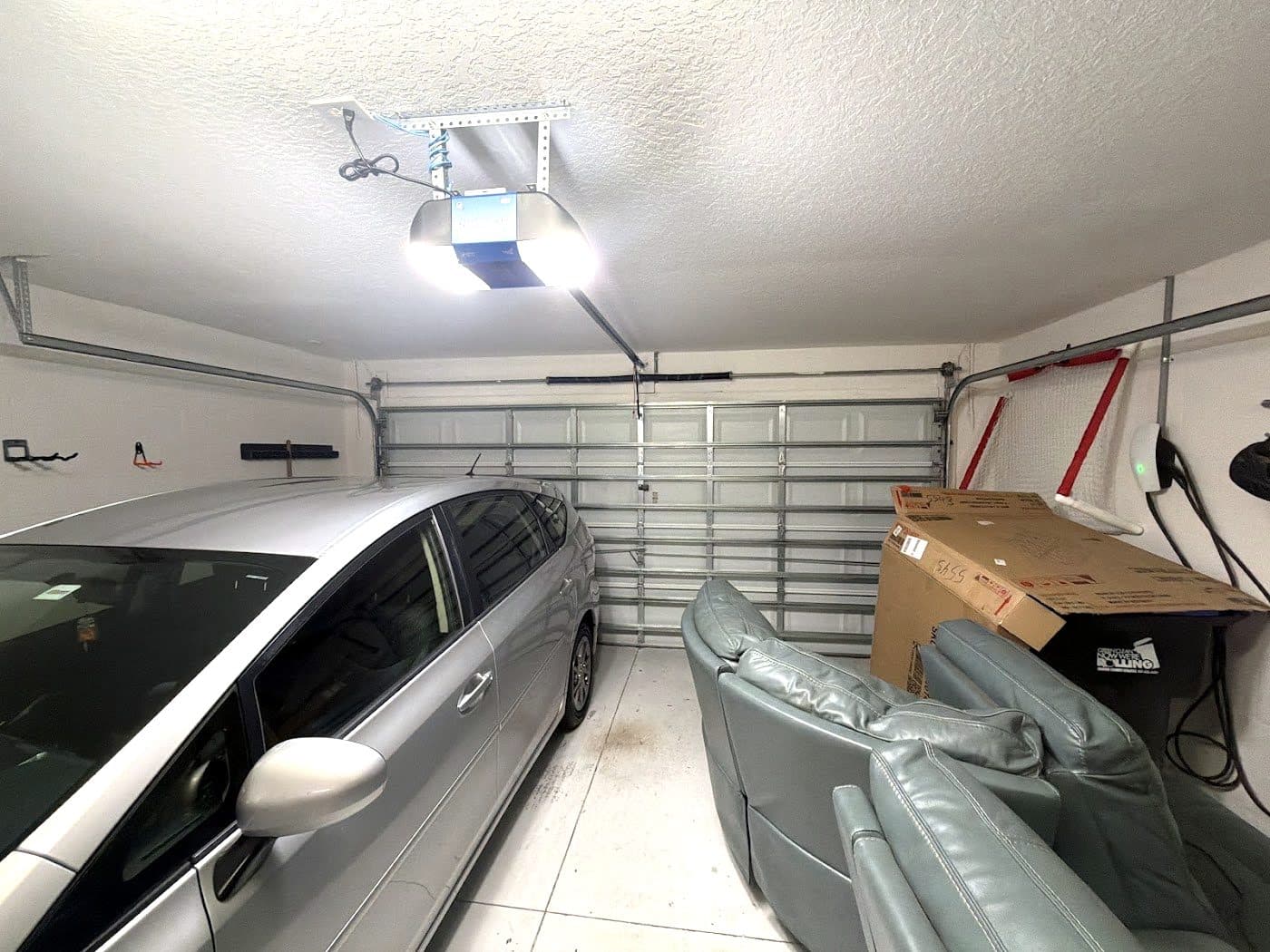
Your Garage Door Won't Open: A Step-by-Step Action Plan
Stay Calm — Most Failures Have a Simple Cause
A garage door that refuses to open is one of the most frustrating home problems, especially when you are in a hurry. The good news: the majority of failures come down to a handful of common causes that you can diagnose in under five minutes.
Work through these steps in order before calling for service.
Step 1: Check the Power
Is the opener getting power?
- Look for the indicator light on the opener motor unit. If it is dark, there is no power.
- Check the outlet the opener is plugged into. Reset the GFCI outlet if there is one nearby.
- Check the breaker box for a tripped circuit.
- Try plugging something else into the same outlet to confirm it is live.
A dead opener is one of the most common causes of a "broken" garage door—and one of the easiest to fix.
Step 2: Check the Remote Batteries
Remote batteries typically last 1–2 years. If the wall button works but the remote does not, the batteries are almost certainly the culprit. Replace them with fresh batteries and test again.
If neither the remote nor the wall button works, the issue is with the opener itself—not the remote.
Step 3: Check the Safety Sensors
Your garage door opener has two small sensors at the bottom of the tracks, about 4 inches off the floor. They emit an infrared beam across the door opening. If anything interrupts that beam—a leaf, a spider web, a child's toy—the opener will refuse to close (and sometimes refuse to open as well).
To check:
- Look for a blinking or amber LED on one of the sensors—this indicates the beam is misaligned or blocked
- Clear any debris between the sensors
- Gently realign them so both indicator lights glow solid
- Wipe the sensor lenses with a dry cloth
Step 4: Check the Lock
Many wall-mounted control panels have a vacation lock or manual lock button. If this was accidentally activated, your remote and app will be disabled. Look for a lock icon on your wall panel and press it to toggle it off.
Step 5: Inspect the Spring
Stand inside and look at the horizontal spring above the door opening. If you see a visible gap in the spring coil, it has broken. A broken spring will make the door extremely heavy and the opener will not be able to lift it alone.
Do not attempt to operate the door with a broken spring. Call a technician. This is not a safe DIY repair.
Step 6: Disconnect and Operate Manually
Pull the red emergency release cord that hangs from the trolley. This disconnects the door from the opener drive and allows you to lift it by hand.
- If the door lifts easily by hand, the issue is with the opener, not the door
- If the door is extremely heavy or will not budge, the springs need professional attention
Important: If you disconnect the opener and lift the door manually, do not leave it unattended in the up position. It may come down unexpectedly if the springs are damaged.
Step 7: Reprogram the Opener
If the door operates manually but the opener will not respond, the remote may have lost its programming. Consult your opener's manual for reprogram instructions—it usually involves pressing the "Learn" button on the motor unit, then pressing the remote button within 30 seconds.
When to Stop and Call a Professional
Stop troubleshooting and call us if:
- You see a broken or clearly damaged spring
- Cables are loose, frayed, or off the drum
- The door is off its tracks
- The opener makes a grinding or straining noise but the door does not move
- The door has been hit by a vehicle
Just-In-Time Emergency Service
We offer same-day and emergency garage door service throughout Mount Dora and Central Florida. If your door will not open and you are stuck, do not wait—call us now.
Call (352) 801-6590. We answer 7 days a week.
Ready for Expert Help?
The Just-In-Time Garage Door team is here to help with any garage door repair, maintenance, or installation needs in Mount Dora and Central Florida.